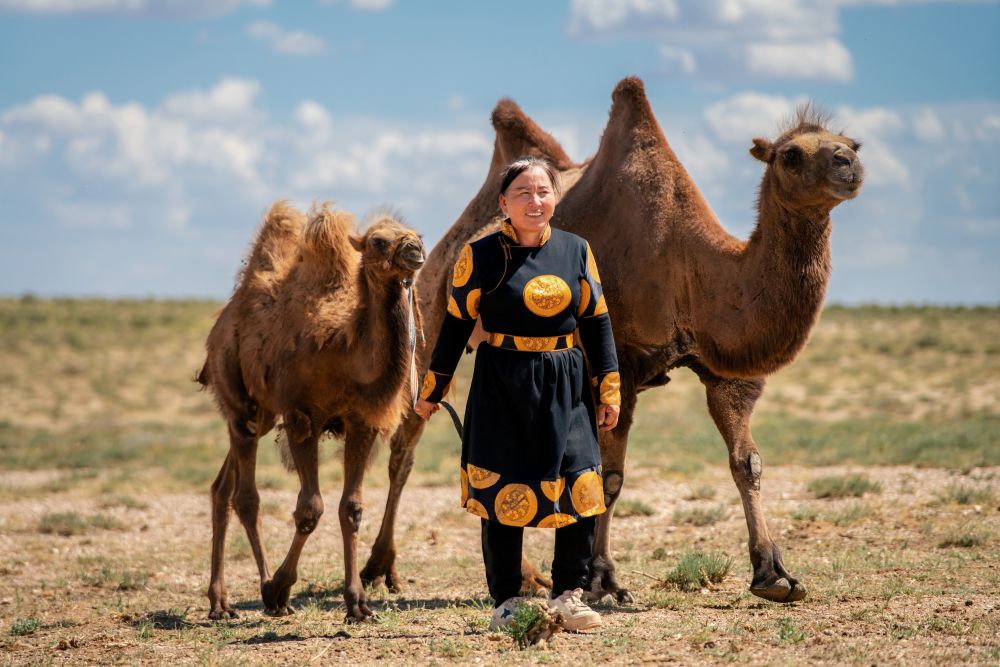
Women Climate Champions are a network of women from herder communities across the Gobi, supported by WCS Mongolia .
Together, the Women Climate Champions are using their voices and experience to lead local action for people, wildlife and a more resilient Gobi.
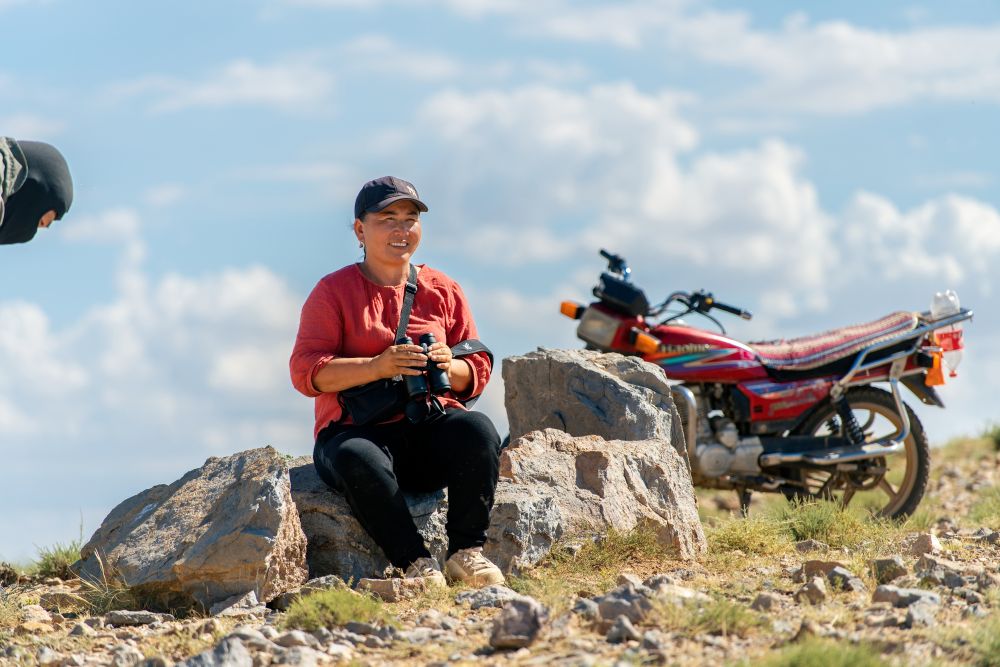
P. Narantsatsralt, a Women Climate Champion from Khatanbulag Soum, Dornogobi Province, who leads Tsagaan Khoshuu Community-based Organization, shares her story (Watch Video):
I am a camel herder from Khatanbulag soum in Dornogobi Province. Together with my family, I also work as a community ranger. For three generations, my family has lived throughout the four seasons around a precious natural spring that we call Khatny spring. This spring is more than a source of water for us. It is part of our homeland, our livelihood and the wider Gobi ecosystem that we share with wildlife.
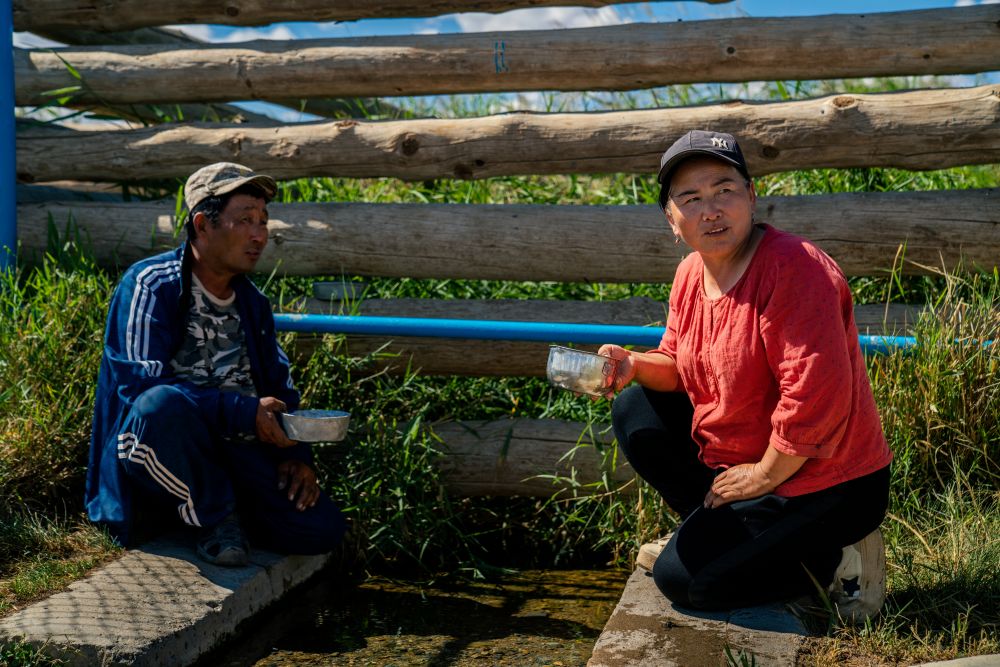
A year ago, the Wildlife Conservation Society (WCS) conducted a water-quality assessment at Khatny spring. Based on the findings, WCS helped the local government and community members protect the spring source with a small protective fence. The fence protects the source itself from trampling and damage, while water from the spring remains available to people, livestock and wildlife. A camera trap was also installed to monitor how the spring is used. As a community ranger, I help collect monitoring data and regularly take part in caring for the spring, keeping the surrounding area clean and making sure the source remains protected.
Through this work, I have come to understand something very simple. Nature does not ask much from us. Sometimes, it needs only a little attention, care and respect. For me, that also means thinking carefully about what we use and what we leave behind. Rather than relying only on things we buy and later throw away, I try to make use of the materials our camels provide. I make many of the things my family needs, including ropes, halters and other household items. This is a skill and way of life that I inherited from my mother. In recent years, we have seen more household waste around the spring and across our grazing areas, including plastic, glass, synthetic ropes and other discarded materials. My husband and I collect and clean up this waste every year. These experiences have made me appreciate even more the wisdom behind the traditional herder way of life: use what is locally available, do what you can, make things last, reuse materials, and leave as little waste behind as possible. For me, this is not simply an old tradition. It is a practical way of living responsibly in a fragile environment. I wanted to share this knowledge with neighboring families, young herders and children.
With support from WCS, I began an awareness initiative to share these skills and ideas, including how using materials from our camels can reduce our reliance on purchased materials and help us produce less waste, and how traditional Mongolian herding practices can help us live more responsibly with nature. I met with schoolchildren and local community members to discuss how waste affects soil and water, and why water sources are so important for people, livestock and wildlife alike. I also shared what generations of camel herders have learned about living in the Gobi. For us, the camel is much more than a source of livelihood. It is part of how generations of herders have adapted to life in the dry and fragile Gobi. Camels are well suited to this arid environment, and they provide herder families with many useful products. Our ancestors also taught us to make full use of what the camel provides, including wool, milk and hide, and to turn these resources into useful products rather than depending only on materials brought in from elsewhere. These are not simply traditions from the past. These are knowledge and practices that can help us respond to the changing climate we face today.
For me, conservation is not only about planting trees or cleaning up waste. It begins with passing on the attitudes, knowledge and everyday practices that our ancestors used to live with nature rather than against it. If our children understand the value of this traditional knowledge, and if they learn how to live responsibly in the Gobi, I believe we can protect a future where people, livestock and wildlife continue to share this landscape. The knowledge passed from my mother to me is something I now want to pass on to the next generation. Because protecting our heritage and protecting nature are not two separate things. In Gobi, they are part of the same story.