Women Climate Champions are a network of women from herder communities across the Gobi, supported by WCS Mongolia .
Together, the Women Climate Champions are using their voices and experience to lead local action for people, wildlife and a more resilient Gobi.
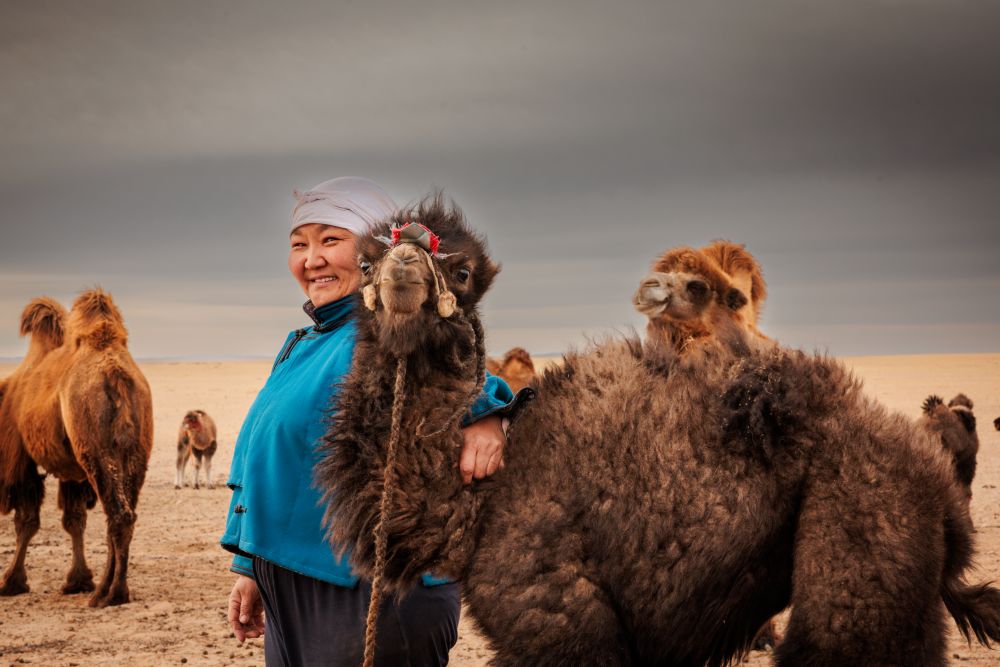
Photo by Benjamin Buckland ©
D. Sarantuyaa, a Women Climate Champion from Khatanbulag Soum, Dornogobi Province, who leads Undurkhukh Community-based Organization, shares her story:
I am a herder from Khatanbulag soum in Dornogobi Province. During the summer, our family stays near a busy roadside place locally known as the “60 Canteen.” It is a regular stopping point for heavy trucks, and plastic bottles, glass, cans and bags are often left scattered across the landscape. Although the waste is not ours, I kept asking myself: “If we do not take action, who will clean and protect our homeland?”
So, I started with something very simple. Whenever I went out to tend our livestock, I carried a bag with me and collected the rubbish and plastic I found along the way. Our winter camp is near Shivneen Spring, an important water source visited by wildlife during the harsh winter and spring months. Argali sheep, ibex and khulan (Mongolian Wild Ass) come here to drink. Seeing these animals reminded me how precious this small source of water is in the Gobi, and how important it is to keep it clean and safe. A year ago, the Wildlife Conservation Society (WCS) conducted a water-quality assessment at Shivneen Spring. We learned that protecting the place where the water first comes out of the ground can help keep the spring healthy.
Together with the local government, WCS and our community, we put a small fence around this sensitive area so it is not trampled or damaged. The animals can still reach the water and come to drink as they always have. Camera traps were also installed, and I volunteered to help monitor the wildlife and care for the spring area. Seeing the wildlife coming to drink from Shivneen Spring inspired me to do more.
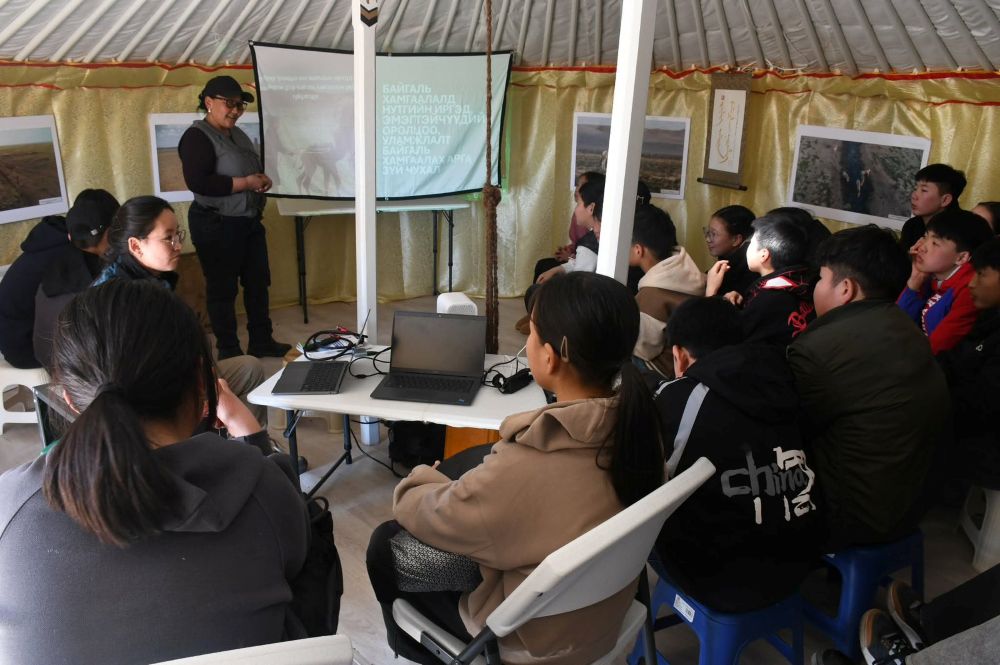
Caption: Sarantuya engaging local school children at WCS Mongolia's Gobi Ecological Research Station in Dornogobi
Through the Gobi Women Champions Initiative I turned my idea into a small community project and launched the ‘Waste-Free Khatanbulag’ campaign together with other herders, the school and other soum service organizations. Together, we cleaned our surroundings, raised awareness and encouraged people to reduce waste. But my goal was never simply to collect rubbish. I wanted people, especially children, to understand how our everyday choices affect the land, water, livestock and wildlife around us. I worked with schoolchildren and local organizations, using real examples from around the spring to show how plastic, bottles, cans and other waste can harm soil, contaminate water and threaten both livestock and wildlife.
We organize awareness activities, learning sessions and community clean-ups. I also wanted to remind young people of something our nomadic ancestors understood very well: use things carefully, reuse what you can, waste as little as possible, and leave the land unharmed. This traditional knowledge of living responsibly with nature is something worth carrying into the future. The most rewarding result for me was not the number of bags of rubbish we collected. It was the change I saw in the children. They told me: “We will go home and tell our parents.” “We will never throw rubbish on the ground again.”
Hearing those words and seeing their determination meant more to me than all the bags of waste we had removed. My dream is not only to protect one spring. It is to build a Waste-Free Khatanbulag where everyone takes responsibility for protecting the land we share. A clean environment cannot be created through a single clean-up day. It begins when each of us changes our own habits and takes responsibility for the nature around us. And sometimes, leadership begins with something as simple as picking up the first piece of waste.
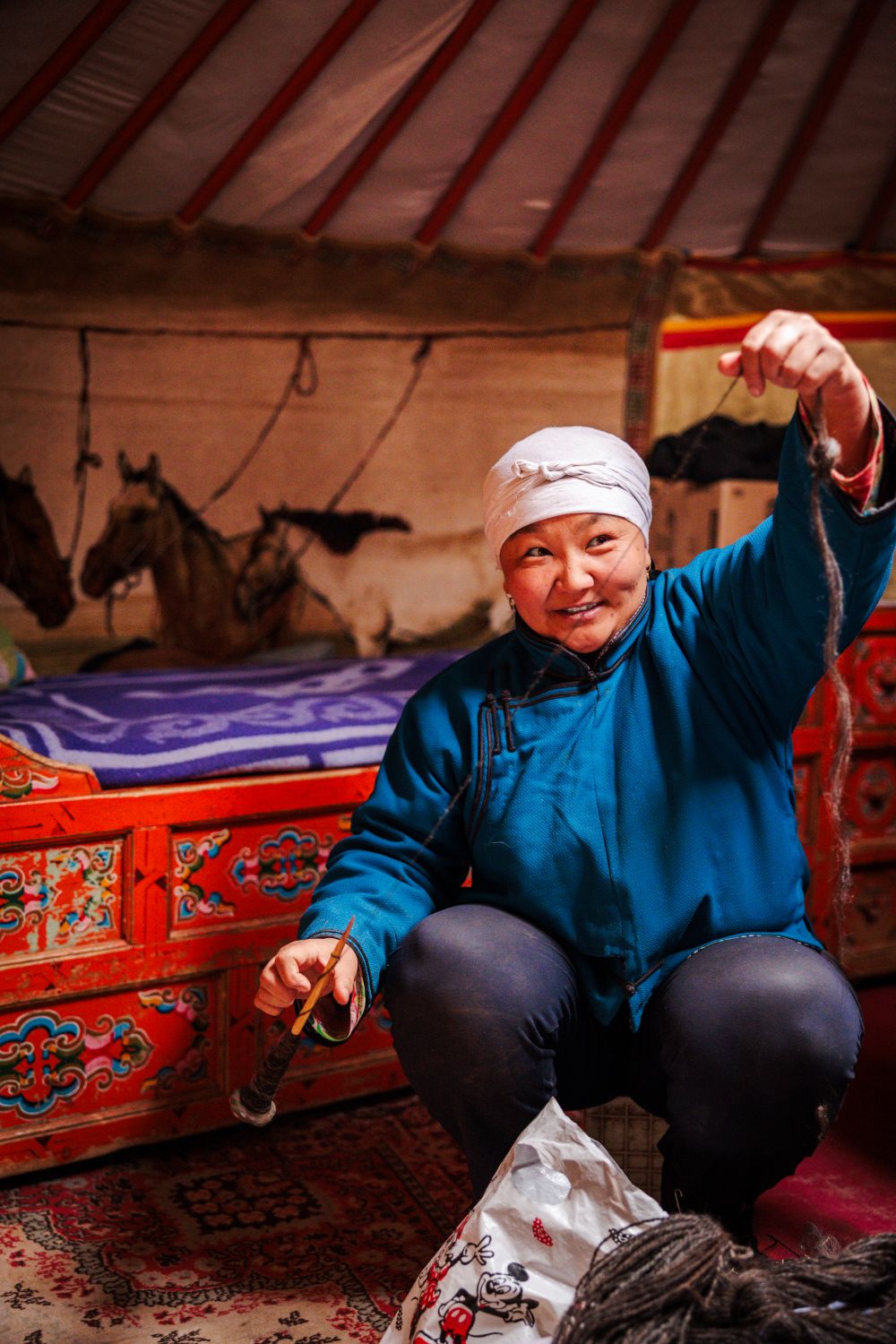
Photo by Benjamin Buckland ©