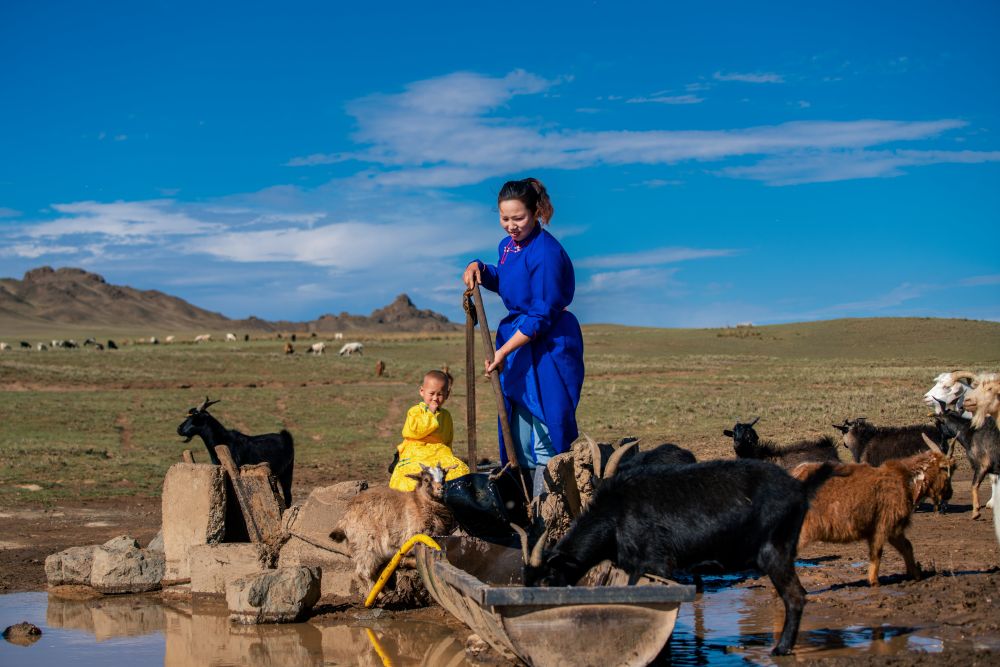
Women Climate Champions are a network of women from herder communities across the Gobi, supported by WCS Mongolia .
Together, the Women Climate Champions are using their voices and experience to lead local action for people, wildlife and a more resilient Gobi.
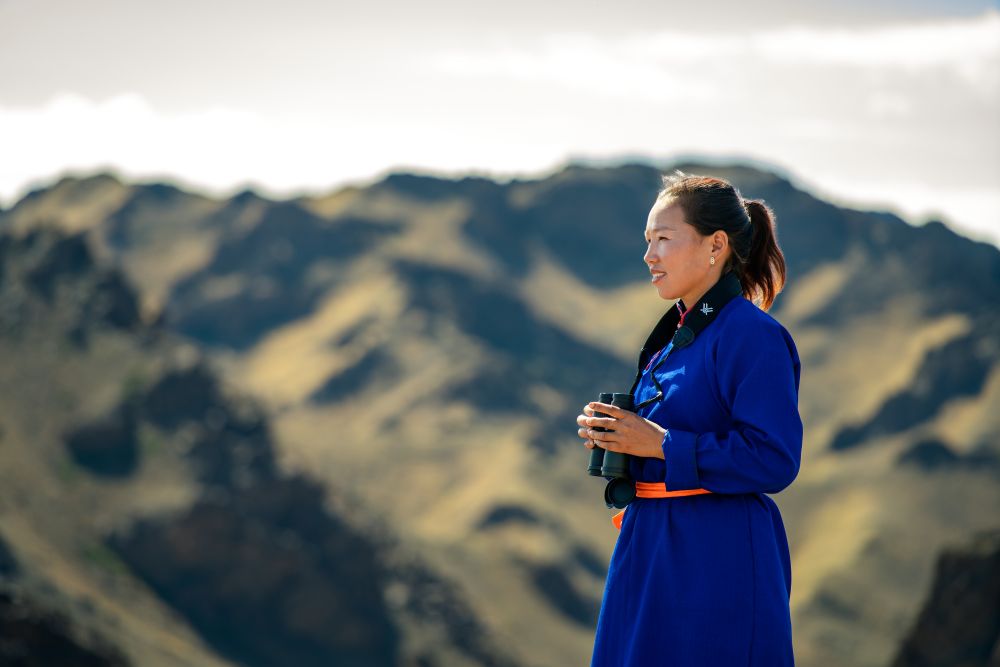
E. Tumenchuluun, a Women Climate Champion from Bayandalai Soum, Umnugobi Province, who is a member of Dul Community-based Organization, shares her story (Watch Video):
I am a herder from Bayandalai soum in Umnugobi Province and a mother of two children. Like many herder women in Gobi, my days are busy caring for livestock, raising my children and looking after our household. But I also actively volunteer to protect the nature and wildlife of my homeland. For me, our land, our livelihoods and nature are inseparable. I want my children to grow up understanding this connection and feel responsible for protecting the place they call home. My husband is a community ranger. We raise our livestock in a landscape shared with many wild animals, including snow leopards, argali sheep and ibex. Through my husband and local conservationists, I have learned a great deal about predators, particularly the snow leopard. Some people see the snow leopard simply as ‘an enemy of livestock’. But the more I learned about its role in nature, the more I came to respect and value this remarkable animal.
Today, mining, human activities and pasture degradation are putting increasing pressure on wildlife habitats and reducing their natural food sources. During difficult years of drought and dzud, the extreme winter conditions we experience in Mongolia, snow leopards may sometimes prey on livestock. This can create conflict and lead some herders to see them only as a threat to their livelihoods. But I came to understand that we cannot look at the snow leopard in isolation. We need to see the whole ecosystem and understand how everything is connected. The continued presence of snow leopards in our mountains tells us something important. Our ecosystem is still alive and functioning. Protecting the snow leopard, therefore, is not only about saving one species. It is about maintaining the balance of nature, protecting the landscape we depend on, and safeguarding a healthy environment for our children. That is why I decided to begin my small project with children, the future guardians of Gobi. I worked with students from the local school’s Yol (Bearded Vulture) Eco Club as part of the Women Climate Champions initiative.
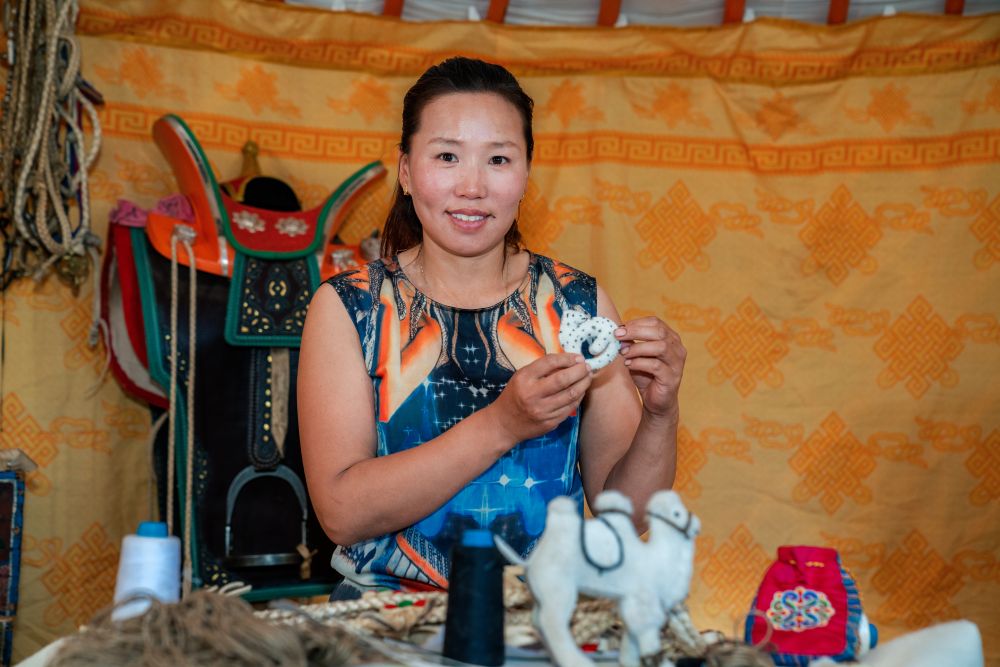
Caption: Tumenshuluun shows the snow leopard felt toy she makes during her interactive activity with school children.
We organized interactive activities about snow leopards and other Gobi wildlife, helping children understand the role each species plays in the ecosystem and why these animals deserve our respect and protection. One activity became especially popular: children learned to make snow leopard toys using felt. As they created the animals with their own hands, the snow leopard became more than something they had simply heard about in a lesson.
It became something they could connect with, remember and feel proud to have in their homeland. But the most valuable result came afterwards. The children took these conversations home. They began talking with their parents, siblings and relatives about what they had learned. One child shared: “I didn’t know such an amazing animal lives in our homeland.” Another said: “We need to protect our snow leopards.” Hearing those words made me realize that children can become powerful messengers for coexistence within their own families and communities.
Through this project, I learned something that I will always carry with me: conservation begins with the love and understanding we nurture in a child’s heart. A child inspired to protect nature today may grow up tomorrow to become a herder who lives in harmony with wildlife, a scientist, a conservationist or a community leader. And I am proud that I could help plant the first seed of that change.