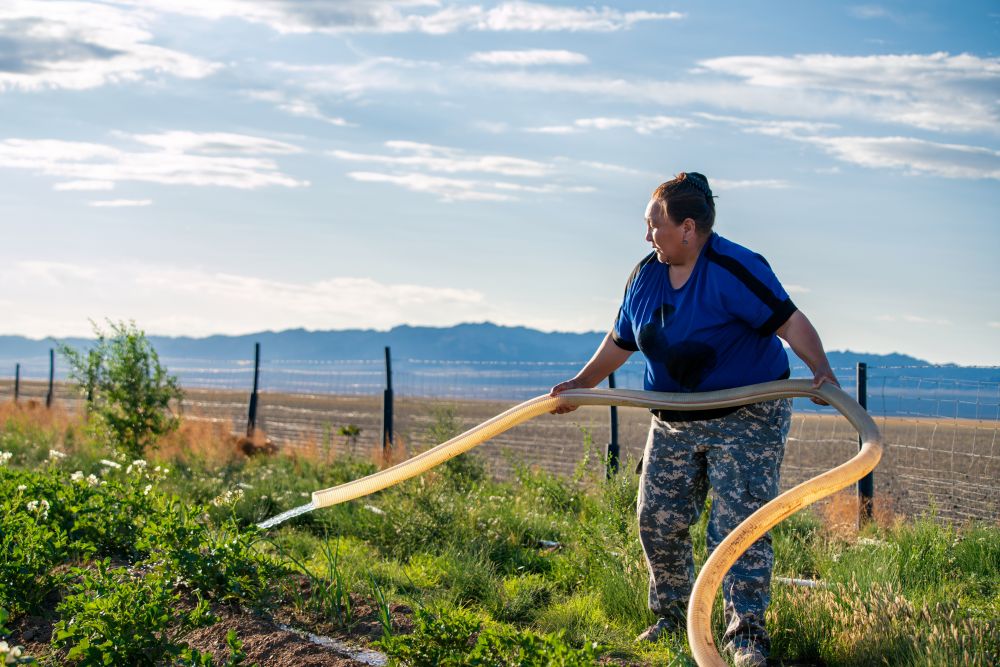
Women Climate Champions are a network of women from herder communities across the Gobi, supported by WCS Mongolia .
Together, the Women Climate Champions are using their voices and experience to lead local action for people, wildlife and a more resilient Gobi.
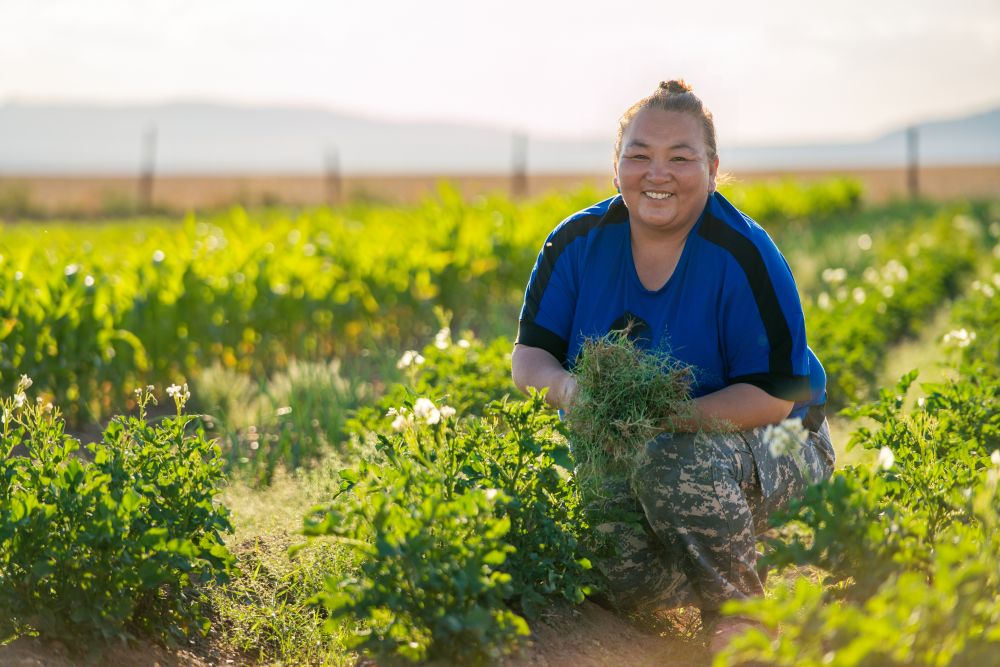
Kh. Otgonbayar, a Women Climate Champion from Bayandalai Soum, Umnugobi Province, who leads Temuulel Community- based organization, shares her story (Watch Video):
I am the leader of the Temuulel Community Group in Bayandalai soum, Umnugobi Province, and a community ranger. For me, protecting nature is not simply a job. It is a responsibility I carry for my children and for the land we call home. Illegal gold mining has been a serious problem around our winter and spring camp areas.
Sometimes, we wake up in the morning to find that deep pits have appeared in the land. I still clearly remember what inspired me to start this action project. One day, we discovered that one of our livestock had fallen into an abandoned mining pit. Fortunately, we were able to save it.
But I could not stop thinking: “How many wild animals might have fallen into these pits when no one was there to see or save them?”
That moment stayed with me. I knew we had to do something to close these abandoned mining pits and help restore our land. For me, land restoration is much more than filling holes with soil. It is about healing the wounds of our land and giving nature the opportunity to recover. Filling abandoned mining pits reduces the danger they pose to people, livestock and wildlife.
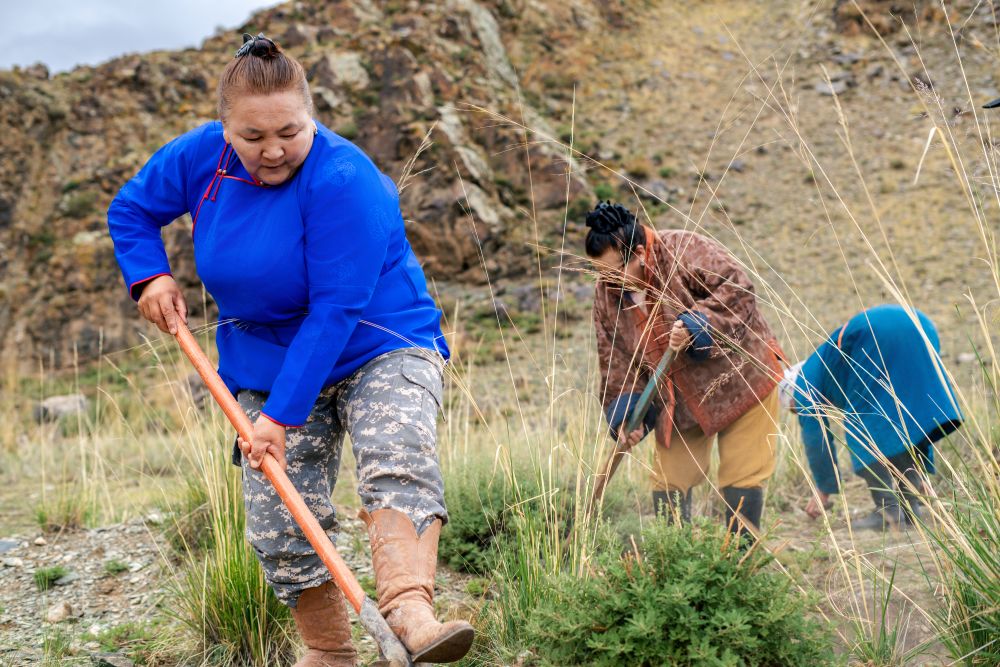
It can also help reduce soil moisture loss and limit wind and water erosion. Most importantly, it creates conditions for native vegetation to return and for the land to begin recovering. We also removed large amounts of waste left behind by illegal miners, including discarded batteries, cigarette butts and other rubbish. Cleaning up this waste was another important step towards restoring the soil and landscape. Afterwards, we planted native trees and continued to water and care for them. Through these small actions, we hope to retain soil moisture, reduce erosion and contribute to protecting Gobi’s fragile soils.
I could never have done this work alone. With the support of our members of Temuulel Community, local herders, soum environmental specialists, we restored land around the Tavan Ovoo River area by filling up more than 82 abandoned mining pits and removing six truckloads of waste. The most encouraging moment came afterwards, when we saw native plants beginning to grow again on the restored land. That experience taught me something very important: Nature has an incredible ability to recover. Sometimes, it simply needs us to give it a chance. Conservation does not always begin with a large project or a large amount of money. It can begin with one person who cares deeply about their homeland and decides to act. Every abandoned pit we fill removes one more danger for people, livestock and wildlife. Each one is a small but meaningful investment in the future of Gobi. I have seen it with my own eyes that when we help heal the land, nature finds a way.