This interview was originally published on Saiga News by Saiga Conservation Alliance.
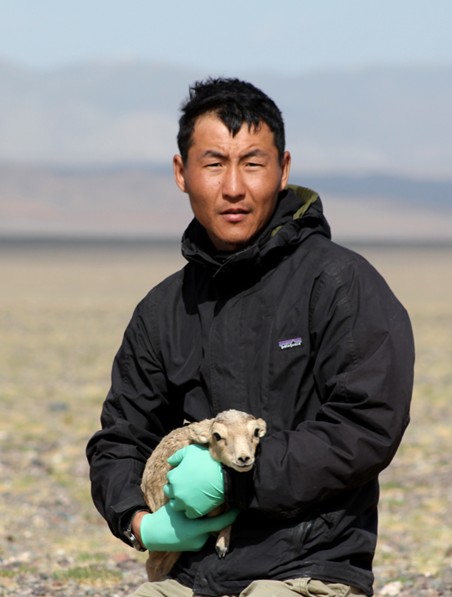
Dr. Buuveibaatar Bayarbaatar (Buuvei) is a Senior Scientist with the Wildlife Conservation Society (WCS) Mongolia Program . He studies and helps protect Mongolia’s nomadic ungulates, including khulan, gazelles, and saiga antelope. He also represents Mongolia as Scientific Councillor to the Convention on Migratory Species (CMS). In addition, Buuvei serves on the Steering Committee of the Saiga Conservation Alliance and is a member of the IUCN Equid Specialist Group and the IUCN Antelope Specialist Group.
When did you first become interested in the saiga?
My interest in saiga started back in 2006 when I was a young researcher at the Mongolian Academy of Sciences. That year, I had the opportunity to join a WCS project focused on saiga conservation. In September, we traveled to the saiga range in western Mongolia, and it was the first time I saw this remarkable species in the wild.
What immediately struck me was how different saiga are from other ungulates. They run with their heads held low and never leap, which gives them a strange, almost prehistoric appearance. During that trip, our team made history by capturing and collaring adult saiga using a drive-net method — something that had never been done for the species before. Seeing and handling these animals up close was an unforgettable experience. That was the moment I truly became fascinated by the saiga.
When did you start working on saiga research and conservation?
My direct involvement began in 2006 during that first movement study. Later, our team introduced systematic distance sampling surveys, which was the first time this approach had been used for saiga in Mongolia. These surveys have since become the national standard for estimating population size and trends.
A few years later, I led a study on reproduction, calf survival, and causes of mortality. Over three years, we captured and collared 116 saiga calves to track their survival and movements. This work eventually became the foundation of my master’s thesis at the University of Massachusetts Amherst, USA. Since then, I have continued working on saiga research, focusing on their movement ecology, interactions with livestock, and threats from infrastructure development and disease.
Do you have a memorable story from your fieldwork?
Yes, one that I will never forget. In 2008, we went on our first field mission to capture and collar saiga calves. We had purchased 40 radio collars, but none of us had ever seen a newborn saiga before. Based on herder accounts and limited scientific literature, we expected births to occur in late May, so we planned our expedition accordingly.
Every day, from sunrise to sunset, we followed pregnant females, hoping to spot newborns. Saiga mothers are known to nurse every two to three hours, so we spent long hours observing them patiently. After a week of searching, we had not found a single calf. Even our team leader, Dr. Joel Berger, had to leave when his scheduled field days ended. We were tired and discouraged, still carrying all 40 unused collars.
Then one evening, as we were driving back to camp, we heard faint bleating sounds through the open window. We stopped the vehicle and began searching the area. Suddenly, one of our team members called out. There, lying motionless on the ground, was a tiny saiga calf perfectly camouflaged against the desert soil. Moments later, another teammate found a second one. They were newborn twins, each weighing about 2.5 kilograms.
That discovery changed everything. Over the next week, we began finding calves regularly and managed to deploy all 40 collars. From that study, we learned that Mongolian saiga typically give birth around June 10, with most births occurring between June 13 and 20. Most females give birth to twins, although the rate drops after harsh winters. Sadly, about half of the calves die within their first year, mainly due to predation by foxes and eagles.
What are the biggest challenges in your work?
Fieldwork in Mongolia’s desert regions is always demanding. The distances are long, the weather can be extreme, and access to basic facilities such as water, fuel, and communication is limited. Every expedition requires careful preparation and endurance.
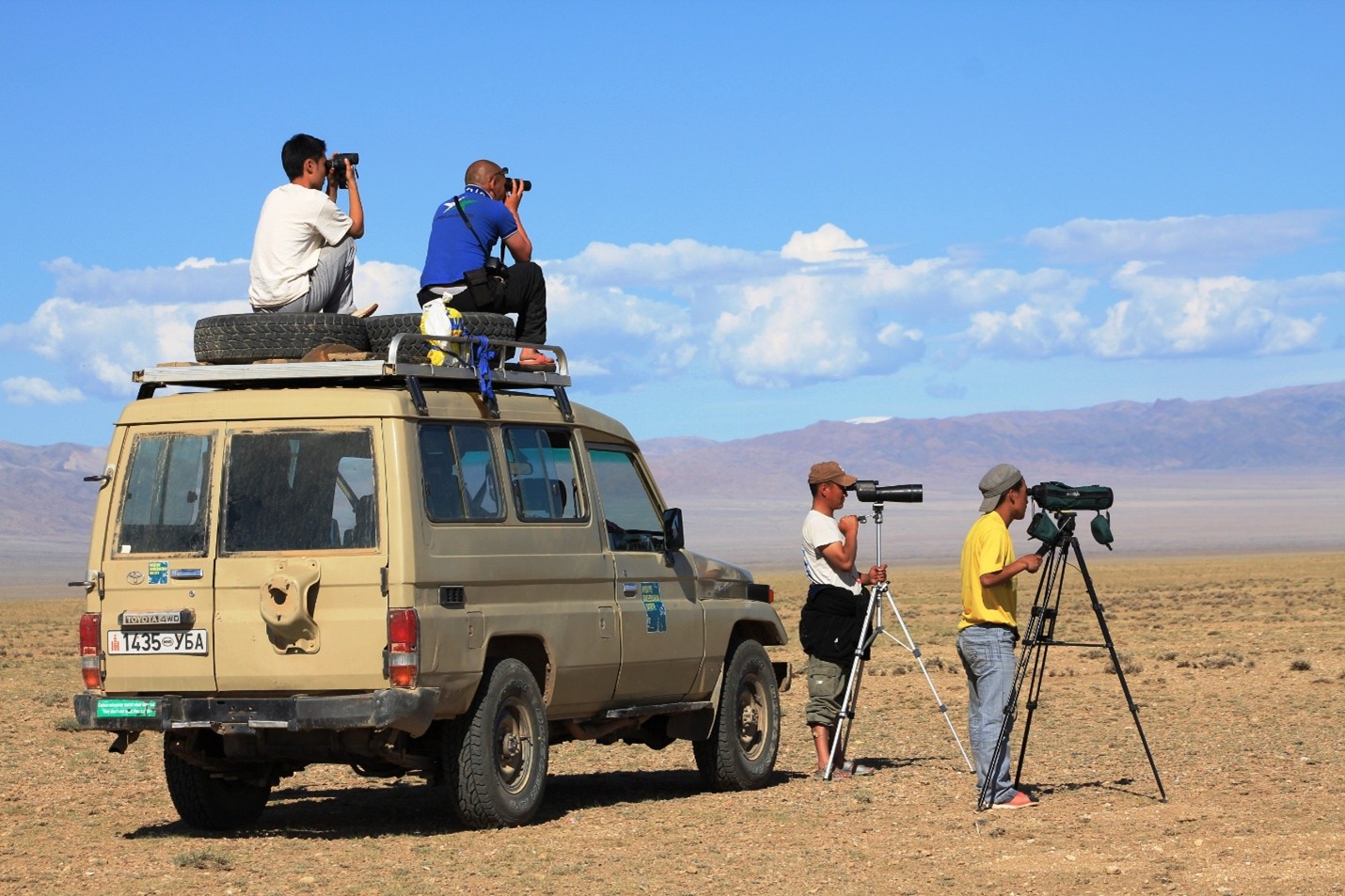
Caption: Field team searching for newborn saiga calves in western Mongolia. Spotting saiga calves is a challenging task that often requires many hours of careful observation.
Beyond logistics, the conservation challenges are complex. Habitat degradation continues to worsen due to overgrazing by livestock, mining, and infrastructure development that fragments migration routes. Disease outbreaks such as Peste des Petits Ruminants (PPR) and Foot and Mouth Disease (FMD) can devastate populations in a matter of weeks.
Another challenge is ensuring long-term funding and institutional commitment. Saiga conservation requires sustained effort over many years, yet most projects operate on short-term grants. Keeping government partners and local communities engaged over time can be just as demanding as the fieldwork itself.
How can these challenges be addressed?
Many of these challenges can be reduced through stronger collaboration among government agencies, researchers, and local communities. Conservation is most effective when responsibilities are shared and efforts are coordinated.
Better infrastructure planning is also critical. Roads and railways should incorporate wildlife-friendly designs to maintain habitat connectivity and prevent fragmentation. Expanding disease surveillance and rapid response systems is equally important to prevent mass die-offs.
Finally, we need to invest in people. Training and equipping rangers, supporting community-based monitoring, and securing stable long-term funding will help maintain progress even when external support fluctuates. Building local ownership and institutional commitment is the most sustainable way forward.
What do you enjoy most about your work?
For me, the best part of my work is being out in the field, traveling across Mongolia’s vast steppe and mountain landscapes and observing wildlife in its natural environment. I feel most inspired in these places, from the endless grasslands and desert plains where gazelles and saiga roam to the rugged mountains where snow leopards live.
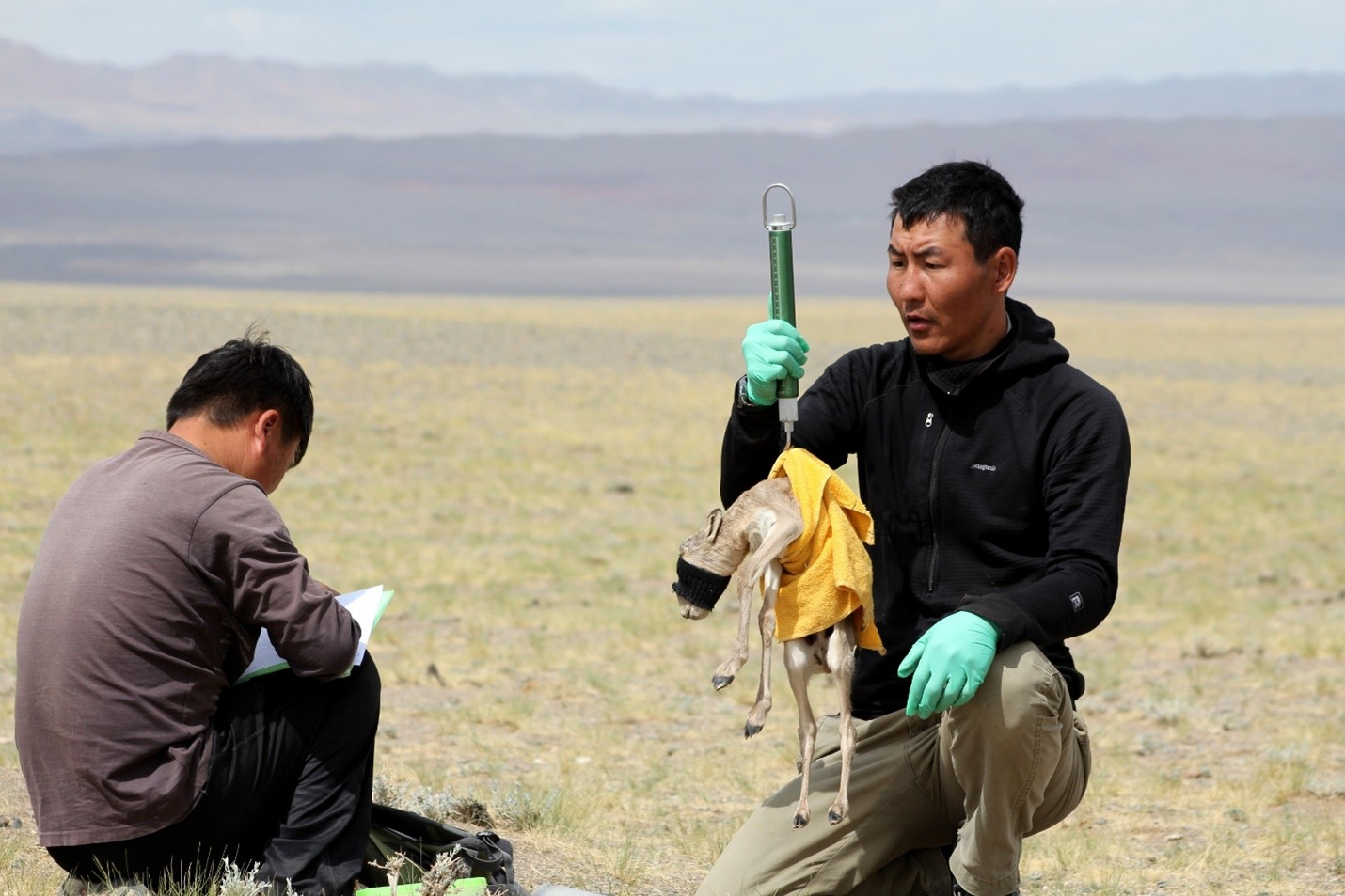
Caption: Weighing a saiga calf during field research in western Mongolia in 2009.
I started my career studying Mongolian gazelles and was later drawn to the saiga. Over time, my work has expanded to include other species such as the Asiatic wild ass, goitered gazelle, and more recently, the snow leopard. These experiences have deepened my appreciation for the resilience and diversity of Mongolia’s ecosystems. Every field trip brings something new: the challenge of tracking elusive animals, the excitement of collecting fresh data, or simply the quiet beauty of dawn on the steppe.
What are the prospects for saiga conservation, and what needs to happen next?
I am optimistic about the future of saiga in Mongolia. The population has shown resilience, but its long-term survival depends on maintaining healthy habitats and connectivity between seasonal ranges. The first priorities should be to restore degraded pastures and water points and to ensure that new infrastructure avoids key migration routes.
In recent years, saiga have started to reoccupy parts of their historical range and form small, permanent subpopulations. Strengthening these new populations and keeping them connected to the main group is vital. At the same time, we must continue to improve disease monitoring and management to prevent future outbreaks from wiping out small, isolated herds.
You have worked in conservation for more than two decades. What has changed during that time?
Over the past 20 years, I have seen remarkable progress in nature conservation in Mongolia. Rural livelihoods have improved as the national economy has grown, largely due to mineral exports, and livestock numbers, which are the main source of income for herders, have increased significantly.
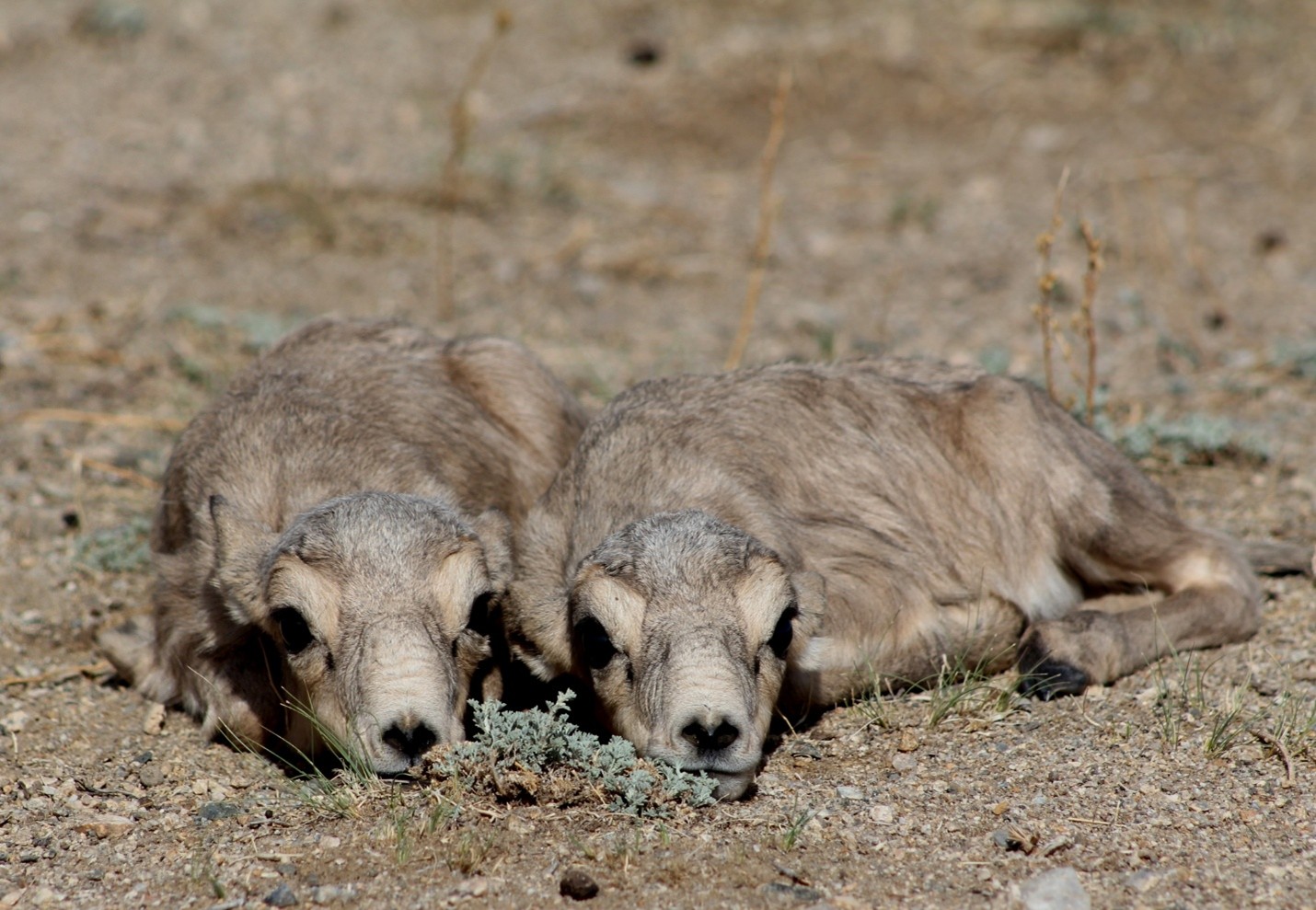
Caption: Newborn twin saiga calves resting on the desert-steppe of western Mongolia.
Public awareness of wildlife conservation has also grown, legal frameworks are stronger, and collaboration among scientists, government agencies, and local communities has improved. As a result, poaching, once a major threat, has declined noticeably.
However, these gains have also brought new environmental challenges. Habitat degradation has worsened due to development and overgrazing, and climate change has led to more frequent and severe extreme weather events.
Mongolia is moving in the right direction, but the main challenge is to find the right balance between economic development and environmental protection. This balance is essential to ensure that unique species like the saiga continue to thrive for generations to come.