By Dr. Justine Shanti Alexander
Country Director
WCS Mongolia
As countries work toward their commitment to halt and reverse biodiversity loss by 2030, one question deserves greater attention: are our efforts delivering meaningful results for species? Protecting and restoring ecosystems is essential, but ultimately, we must also understand whether the wildlife that depends on them is recovering.
Fifteen years ago, I began my PhD studying snow leopards in China’s Qilian Mountains, known as the Sky Mountains. For the first five years, I never actually saw one.
I spent months in remote mountains, searching for tracks, collecting signs of presence and checking camera traps. Sometimes all we found were a few footprints in the snow or a photograph of a cat that had passed through hours earlier. We knew they were there, perhaps watching us. But much of their world remained invisible and poorly understood.
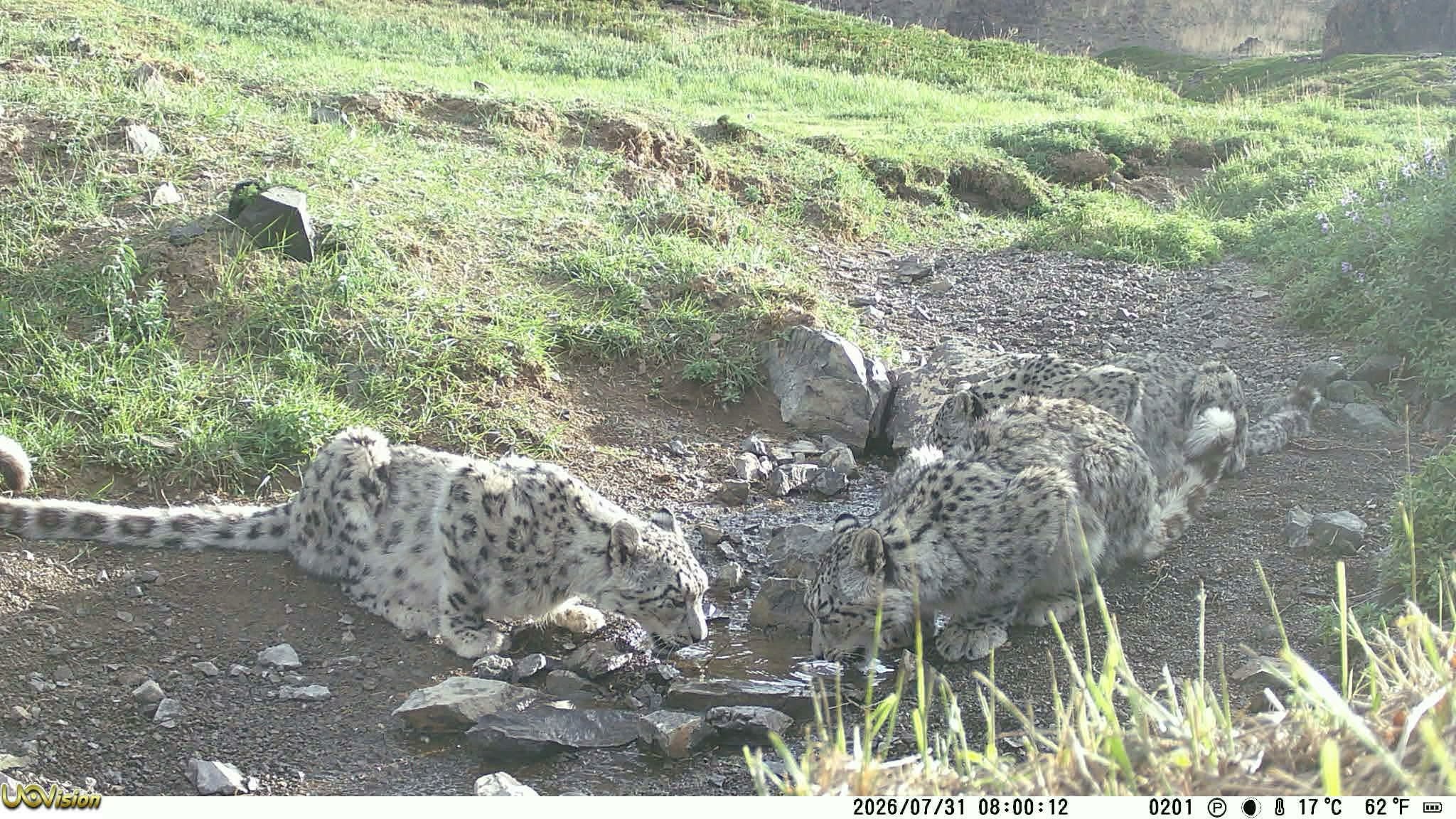
A camera trap set up to monitor wildlife by a herder community group supported by WCS Mongolia captured a rare moment of a family of snow leopards drinking from a spring in Gobi.
For a long time, snow leopards were almost mythical, even for scientists. The first photographs of a snow leopard in the wild appeared in National Geographic in 1971. Today, camera traps, genetics and GPS collars have transformed our understanding of these elusive cats. We can increasingly monitor their populations, movements and habitats, and assess whether our conservation efforts are working.
We have never known more about snow leopards. Yet just as we have gained an understanding of what they need to survive, and are expanding science-based conservation programs, their habitats are undergoing dramatic changes.
Last month, governments gathered in Yerevan, Armenia, for the 17th Conference of the Parties (COP17) to the Convention on Biological Diversity (CBD). The meeting provided an important opportunity to assess progress toward the Kunming-Montreal Global Biodiversity Framework, adopted in 2022, and its 23 targets for 2030.
Several of these targets are directly relevant to Mongolia’s wildlife, such as snow leopards and khulan (Asiatic wild ass). Target 4 focuses on preventing species extinctions and supporting recovery, while Targets 1, 2 and 3 address spatial planning, ecosystem restoration and conserving at least 30% of land and waters. Together, they highlight the importance of protecting species and the landscapes they depend on.
But meeting targets for protected areas or restoration alone does not necessarily mean species are recovering. We also need to measure what is happening to wildlife populations and their ability to move across landscapes.
At COP17, WCS Mongolia worked closely with the Government of Mongolia, particularly the Ministry of Environment and Climate Change, and conservation partners to bring greater attention to the needs of snow leopards and khulan through events at the Mongolia Pavilion.
On International Snow Leopard Day, 23 October, the Government of Mongolia hosted a two-hour roundtable convened by WCS and WWF, bringing together seven international conservation organizations working across the snow leopard range. With the species distributed across 12 countries and much of its habitat outside protected areas, discussions focused on strengthening NGO collaboration to support conservation at scale, including community-based conservation, knowledge sharing and cooperation across borders. Participants agreed to continue exploring opportunities for closer collaboration.
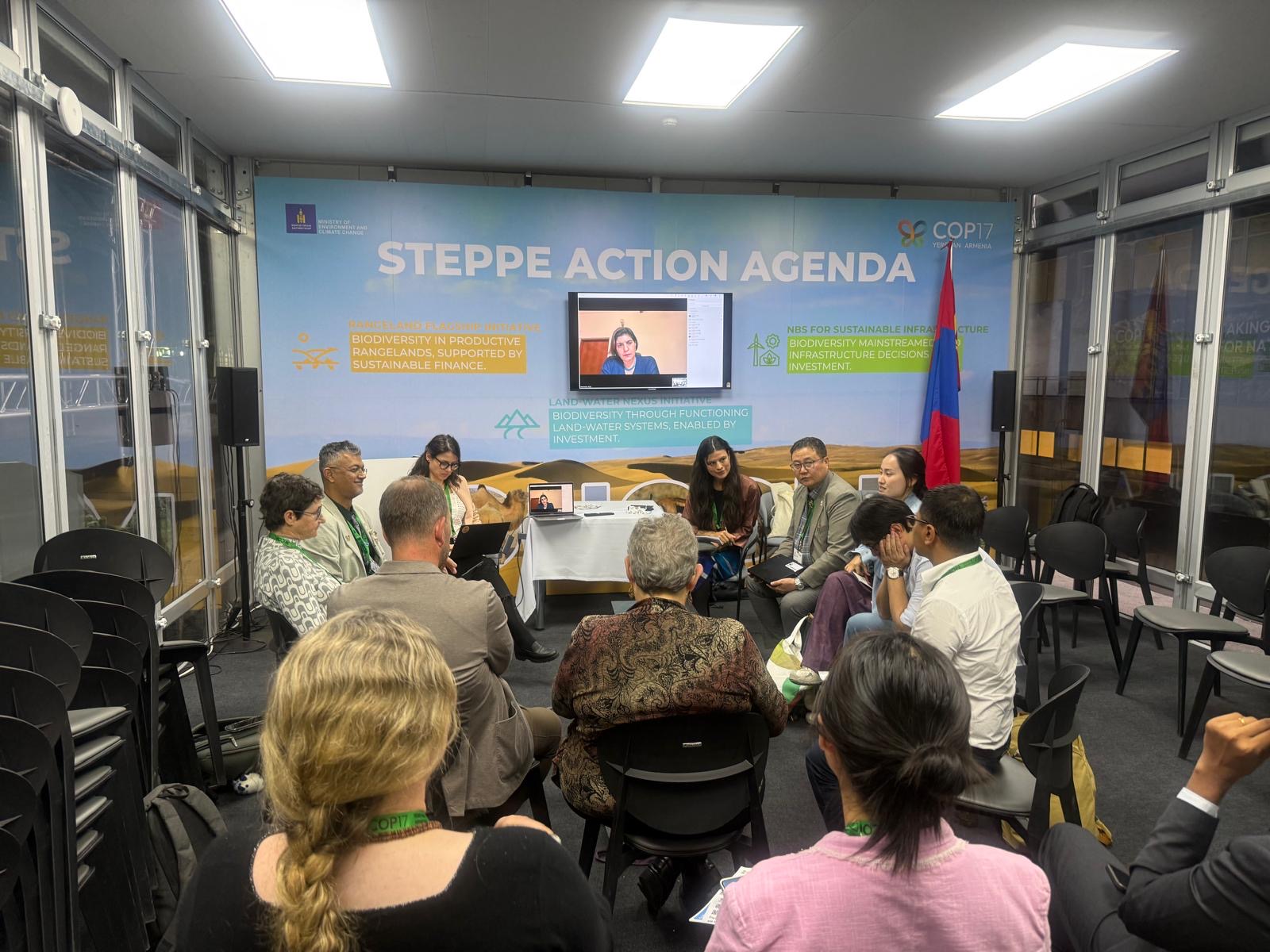
Representatives of seven conservation organizations gathered at the Mongolia Pavilion during CBD COP17 in Yerevan, Armenia, on 23 October 2026. Hosted by the Government of Mongolia and convened by WCS and WWF, the roundtable explored opportunities to strengthen snow leopard conservation across its 12 range countries.
Two days later, on 25 October, Khulan Conservation Day brought attention to another remarkable species. Mongolia is home to approximately 85% of the world’s remaining khulan, making the country central to its global conservation. These animals travel vast distances across desert and steppe landscapes in search of water and forage. Their survival depends on maintaining connected habitats, often beyond protected areas.
The event also provided an opportunity to exchange experiences with colleagues from Kazakhstan, where efforts are underway to reintroduce khulan to parts of their former range, including through the Altyn Dala Conservation Initiative. Their experience reminds us that restoring a species after it has disappeared requires enormous time, effort and resources. For Mongolia, the priority must be to protect khulan and their habitats now, rather than face the far greater challenge of bringing them back once they are gone.
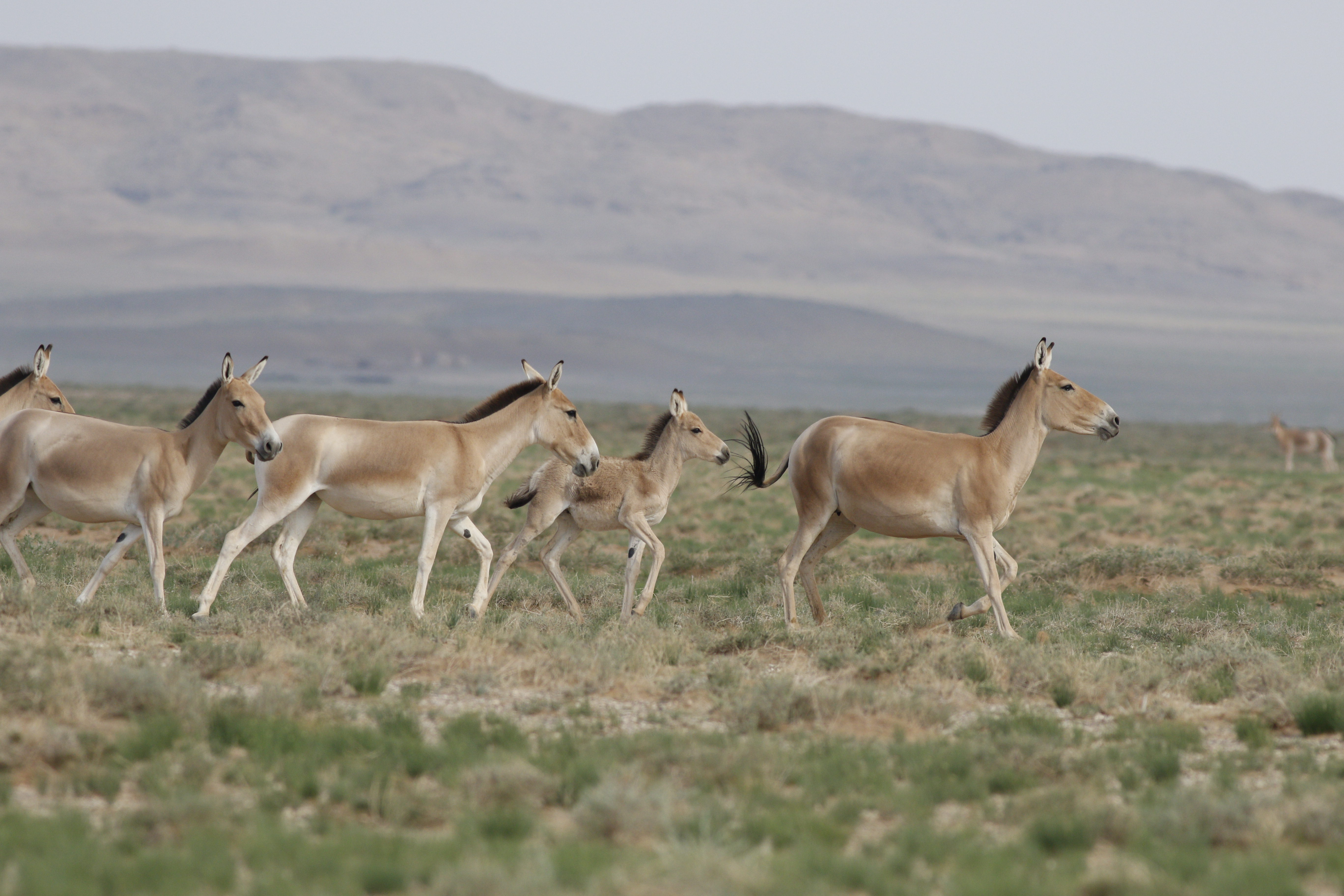
Both species remind us that conservation success cannot be measured only by the area of land protected or restored. We must also ask whether wildlife populations are recovering and whether our efforts are addressing the threats they face.
We have made important conservation progress, but the evidence suggests we are still not doing enough to secure their future. And if this is what we are learning about snow leopards, we cannot help wondering what is happening to the countless species we know far less about.
We thank the Government of Mongolia, particularly the Ministry of Environment and Climate Change, for bringing these discussions to the Mongolia Pavilion at COP17. Such opportunities for international cooperation are important and the real measure of success will be whether we can translate these commitments into lasting results for wildlife.